Showing posts with label health-new-health-trends. Show all posts

Wednesday, 6 June 2012

gluten freeeeeeee


Another weekend of brunch with my sister, who just got a job working at an ad agency. Fancy schmancy. So lucky to spend another weekend with her. Maybe she's not so lucky to spend another weekend chasing me around thrift stores, convincing her that everyone should own a terrarium, reaching new levels of hyper off too much coffee, and getting excited about giant bottles of sriracha at marie catrib's.


Which by the way was absolutely fantastic. This was (half?!) a portion of  local eggs in a tortilla with hand seasoned potatoes and homemade salsa. There's something kind of fantastic about brunching outside while watching everyone come back from the farmers' market carrying awkward plants and bags of produce. It's comforting, kind of like we're on the same wavelength despite being complete strangers. I like that.


So although May (and nat'l celiac awareness month) just passed us by, I decided that it's not too late to write about Celiac disease. I see a lot of patients with this disease at work, and it's always amazing to me how families adapt//don't adapt to a new eating lifestyle.


what is celiac disease (CD)? 

CD is a genetic autoimmune disorder which affects ~1% of the US population. When a person with Celiac disease consumes gluten, the protein in wheat, barley, and rye, their body's immune system attacks the cells of the small intestine, causing inflammation. The small intestine contains many small finger-like projections called villi, which serve as sites of nutrient absorption. In CD, the villi are often blunted or show signs of cell overgrowth, causing malnutrition. 


how is it diagnosed? 

Blood tests for antibodies (TTG and EMA) may indicate a negative response to gluten. A person then undergoes an endoscopy biopsy (scope), where samples of their intestinal tissue are harvested and examined for presence of CD. A positive response to a gluten-free diet confirms the diagnosis. 

how is it treated? 

Those with CD must follow a life-long gluten free diet. Even a small amount of gluten in the diet can be harmful; not everyone will continue to experience symptoms, but they will continue to damage their intestinal cells if they consume gluten-containing foods. 


what about the weird//questionable ingredients?

  • Dextrin – May be derived from corn, waxy maize, waxy Milo, potato, arrowroot, wheat, rice, tapioca, or sago.  Avoid wheat sources.
  • Caramel Color – Safe in the U.S.
  • Modified Food Starch – if wheat is used, the ingredient list will state, “Contains wheat” or “Made on equipment that processes wheat”.  
  • Starch – if wheat is used, the ingredient list will state, “Contains wheat” or “Made on equipment that processes wheat”.  
  • Seasonings and spice blends or mixes (check labels, call companies
  • Baking powder: may contain wheat starch; Rumford Baking Powder - Non-Aluminum and Clabber Girl Baking Powder are gluten-free according to website

Cross contamination is a huge issue when trying to discern safe foods. Even if a food does not contain gluten, there is a chance (especially for grains) that it has come into contact or been processed in a facility that process a gluten-containing grain. The best way to find out if a product is safe is to directly call the manufacturer.

references and resources 


And here's one gluten free recipe I've been experimenting with. Sort of like Larabars in a different form (based on this recipe)

gluten free granola bites

1/4 cup peanut butter
3/4 cup almonds 
1/2 cup raisins
1 teaspoon cinnamon

*make sure all ingredients are GF//not cross contaminated!

Blend in food processor until moderately smooth. Scoop into bite sizes portions. Pack as work//school//whenever snacks. 

Let me know if you have questions or good recipes (especially for gluten free breads) that you think others might love to try...

Thursday, 5 January 2012

a good start to 2012…

Are you used to writing that on everything yet? It takes me a while to correctly date everything. Lately, I’ve been getting the year right but the month wrong. Clearly, I want it to still be December.

The holidays flew by but were an enjoyable time of eating good food and spending time with family and friends, including my favorite twin sister.

IMG_0548

And someone super awesome knows my organizational obsession pretty well and got me these fantastic highlighters and post-it notes to make work more fun. Best gift ever.

IMG_0513

Our family makes Swedish cardamom bread every year, and it’s wonderful with my favorite coffee. Such a good Asian Swede.

IMG_0549

NY Eve was spent waiting for the ball to drop and playing legos with some good friends. Love them. Photo courtesy of Misty’s iphone.

IMG_0552

As a dietitian, I’m very aware that this time of year comes with resolutions to be healthier, and I don’t think that’s necessarily a bad thing…but the motivation often doesn’t last. Rather than go crazy, I believe in baby steps toward better health; start where you are and grow toward something more. If that means walking during your lunch break or eating vegetables 2x a week, that’s good. If it means making dinner from scratch one night a week and giving up diet pop and Splenda, that’s good, too. And if it means giving yourself a break to eat ice cream, that is also good. ;)

My favorite thing right now is roasting a ton of vegetables (sweet and red potatoes, brussels sprouts (?! i know, i know), onions, beets, squash, etc) with garlic and olive oil (and a ton of black pepper) and eating over lettuce with tahini or on top of quinoa. So good. It also is a quick meal to throw together at the end of the day when my energy level takes a dive.

IMG_0550

We got our first snowstorm in Michigan last weekend, but the snow has melted, and it’s back to running in 40 degree temps. It’s been perfect running season for a while, and I hope it stays that way. Wishful thinking? Perhaps…

IMG_0475

And…I don’t particularly like making NY resolutions, but I think it’s always good to keep moving in a forward direction, and if anything, I hope that this year I’ll keep growing and pursuing good things, being creative, and seeking adventure [while avoiding becoming a boring, working adult without any imagination].

What about you?? Pro NY resolutions or not??

0

Monday, 6 June 2011

nutritional yeast and B12

Good thoughts on the USDA’s rollout of My Plate. Andrea made a really good point; the plate does NOT encourage non-processed food over processed food, but because the food industry is so huge, I have to say I’m not surprised.
I went to the Jolly Pumpkin, an Ann Arbor craft brewery with some friends this weekend. Definitely a fun place; they have a rooftop deck that is perfect for summer nights. And they use ingredients from sustainable farmers, organic growers and artisan producers, which is pretty fantastic.
jp
[photo via b.rostad]
Sunday is always a big food prep day because I have pretty much zero energy to pack lunches or cook during the week. I experimented with this recipe for tahini curried carrot salad.
IMG_1360
I’m not crazy about sweet vegetables, so I had to do a little improvising. I left out the raisins and added some spiralized cukes (this is the spiralizer I have). I think next time I’d leave out some of the maple syrup, too.
IMG_1355
The recipe also calls for nutritional yeast, which is big in the vegan world because it contains vitamin B12.
IMG_1385
Vitamin B12:
  • required for proper red blood cell formation, neurological function, and DNA synthesis; plays a role in fat and protein metabolism
  • bound to protein in animal products and is released by the activity of hydrochloric acid and gastric protease in the stomach; however synthetic vitamin B12 (aka that in nutritional yeast) is already in free form and doesn’t require separation
  • the body needs very little B12 on a daily basis; B12 is stored in the liver, so unless you have been a vegan for a long time without supplementation or have digestive issues or kidney disease, you don’t likely have a deficiency.
b12 .
  • amounts listed on a nutrition label are based on 6 µg/day; the nutritional yeast I have contains 40% of the daily value for B12 or 2.4 µg per tablespoon.
  • it is beneficial to get B12 from a variety of fortified sources because absorption can vary.
Do you eat animal products? If not, where do you get your B12?
0

Saturday, 4 June 2011

salad season + goodbye food guide pyramid

Things are starting to heat up around here, meaning many of us say goodbye to hot soups and hello to salads. I’m more than slightly excited about the variety of vegetables and fruit coming into season pretty soon.

[ideas]:

spiralized salads: cukes, carrots, red onion, feta cheese + balsamic vinaigrette. you can get a spiralizer here.

DSCF4106

waldorf salad: try the vegan-friendly homemade mayo.

waldorf

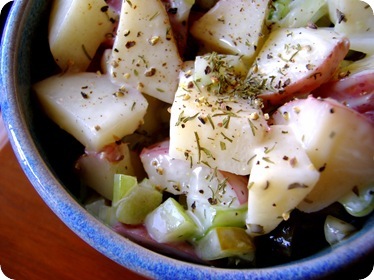
classic potato salad: picnic staple…and not like the weird potato salad at the grocery store that looks unnaturally yellow. ugh.

potato salad

black bean salad: tomatoes, corn, black beans, cucumbers, red onion, and cilantro + olive oil and red wine vinegar.

100_4944

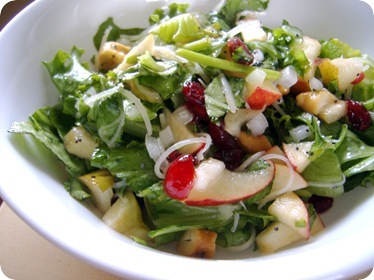
apple and cherry salad: this one is a hit at dinner parties; the dressing is pretty fantastic.

joanie's salad

cherry tomato couscous salad: adding whole grains to vegetables is an easy way to make a side dish into a main course.

couscous salad

5 week fennel salad: this is called such because I made it 5 weeks in a row after discovering the recipe. It’s pretty addicting.

fennel

-------------------------------------------------------

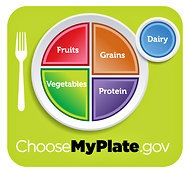
And I’m sure that most of you have seen My Plate, which replaces the former (and incredibly confusing) My Pyramid.

my plate my pyramid

While it’s not perfect, I think it’s a big improvement over My Pyramid. At least vegetables and fruit are given more of a presence. However, I like this model by the Physicians Committee for Responsible Medicine (PCRM) even better.

pcrm plate

Half of the plate is composed of vegetables, which I think would be very beneficial for most of the population. You’ll also notice that there is not a protein group, which is due to the group’s conclusion that animal products are not needed for a healthful diet, and observation that protein can be obtained from grains and vegetables. I agree with this; I don’t have a problem with including meat in moderation, but as factory farming makes ethical meat less available, alternative sources of protein are definitely more attractive and affordable (read my thoughts on protein here and here).

ag_subsidies

This report by the PCRM is pretty interesting. Although the government is encouraging us to eat more servings of fruit and vegetables, more than 60 percent of agricultural subsidies in recent history have directly and indirectly supported meat and dairy production. Less than 1 percent have gone to fruits and vegetables.

So in other words, eat more vegetables and fruit but don’t expect the government to make them more accessible or affordable. Go figure.

Thoughts on the new plate? And any good salad recipes? I’m always expanding my recipe file in the name of creative vegetable dishes…

Hope it is warm + sunny wherever you are…

0

Sunday, 1 May 2011

health halos

My favorite thing about Saturday morning (besides sleeping in, duh) is visiting the farmers’ market. I used to go to Soulard in St. Louis every weekend, I love my hometown’s market, and I’m slowly getting to know Ann Arbor’s market, too.

IMG_1170

I was joined by about 60 billion other hipsters this morning. You will seriously not find a bigger conglomeration of skinny jeans, crossbody bags, and Tom’s shoes in one location (unless you live in Portland).

IMG_1168

I have my favorite vendors in my hometown, and I’m glad the vendors here also don’t mind when I ask them questions like, “how are your chickens raised?” or “do you use pesticides on your plants?”

IMG_1171

And there is just something fantastic about interacting with the people who grow the food you buy. Grocery stores are so intangible, and sometimes I just really enjoy the relational aspect of letting farmers know I appreciate them by buying their produce.

IMG_1178

I really wish that a) I was good at growing plants and b) I had somewhere to grow them. I’d love to at least get a herb garden going, so I can have fresh basil and cilantro whenever this summer.

IMG_1169

Roos Roast Coffee is really good. I tried the Cowboy Blend last time and picked up Lobster Butter Love at this visit. Plus, I think their artsy bags are pretty awesome.

IMG_1172

I read a pretty interesting press release from the American Society of Nutrition recently talking about health halos or labels/characteristics of certain foods that cause people to think they are more healthful. A graduate student from Cornell found that people were more likely to perceive foods with an organic label as significantly lower in calories, lower in fat, and higher in fiber. Organically-labeled chips and cookies were considered to be more nutritious than their “non-organic” counterparts.

Oreo-DoubleMint vs. ss_45NewmanOsCookies

This seems to suggest that people are interested in organic products or know there is some potential benefit to them but don’t fully understand the labeling term. And then you have the whole debate of organic vs. local. The other day, I noticed my organic cucumber was from Mexico; I wonder how many nutrients were left by the time it got to the US (and also about the carbon footprint…yikes). It seems to me that more education is needed.

And even if it has less preservatives or additives, an organic cookie is still a cookie…thoughts?

0

Wednesday, 26 January 2011

i love green

My favorite color is green. I like this color because it reminds me of spring, sustainability, and one of my favorite vegetables, kale.

   IMG_0314

For a long time I thought kale was bitter and was only edible to small herbivorous rodents. Fortunately, I gave it a second chance…and learned how to properly cook it in the process.

Some kale recipes I’ve experimented with:

My latest adventure in kale was inspired by 101 Cookbooks.

IMG_0363 

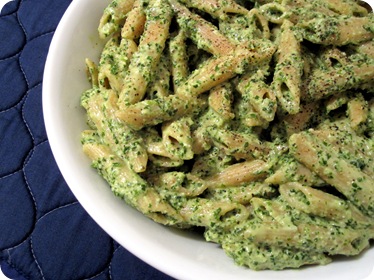
If you’re a pesto lover, you will approve of this easy recipe [20 minutes tops!]. I opted to use feta cheese and whole wheat penne, but I’m sure the original recipe is delicious as it stands.

IMG_0379

Nutritionally kale is pretty fantastic:

  • contains phytonutrients that may help prevent cancer
  • increases production of enzymes involved in detoxification
  • excellent source of pro-vitamin A
  • excellent source of antioxidant vitamin C
  • good source of fiber  (1 cup cooked = 10.4% DV)
  • very good source of calcium (1 cup of kale supplies 93.6 mg of calcium, 9.4% of the daily value for this mineral)
  • good source of copper, vitamin B6, and potassium

Read about raw vs. boiled kale nutrition here.

All that green also justifies homemade blueberry ice cream.

IMG_0249

What’s your fave way to eat kale?!

0

Saturday, 22 January 2011

organic…what does it really mean?

It’s currently –3 outside. It may warm up to 0 degrees by lunchtime. Lovely. But I can’t complain about this view…

IMG_0258

It is one of my goals to watch the sun rise one of these mornings. I’m pretty good at catching the sunsets, but there’s just something about seeing the sun rise before the day starts…

Cold weather calls for warm soup. This kale and potato soup is a perfect way to thaw after…walking out to your mailbox. Ha.

IMG_0266

I had this tidy little post written up about organic food and the dirty dozen, but after reading a chapter on the topic in Michael Pollan’s book, The Omnivore’s Dilemma, my thoughts have changed.

organic

Pollan presents two different views of ‘organic.’ It can be:

  • a labeling term to identify food that meets USDA standards as described below.
  • a philosophy; a way of growing food that most closely mimics nature.

7f

A little trip to the USDA’s website revealed this information:

  • 100% organic: must contain only organically produced ingredients and processing aids.*
  • organic: must consist of at least 95 percent organically produced ingredients;* remaining product ingredients must consist of nonagricultural substances approved on the National List.
  • made with organic ingredients: 70% organic ingredients; can appear on the front of package, naming the specific ingredients.
  • contains organic ingredients: contains less than 70% organic ingredients.

*excludes water and salt; can be labeled with USDA organic seal

produce

Most of us view organic food in the context of the first definition. It has met certain criteria; therefore, we view it as safe and environmentally responsible to eat. However, many organic farms are starting to follow the factory farm model and no longer fit into the second definition of organic.

farm 

While they do not use chemical pesticides, they grow so many crops that the land is depleted, and they must use artificial means to put nutrients back into the soil. While they do not treat their animals with hormones, organic farmers may still confine them to small spaces and feed them “organic grain,” when the animals are naturally meant to digest grass.

csac

The produce you find at Whole Foods is not likely from small farmers; it is more expensive to deal with these farmers, and they do not grow enough produce to stock a grocery store. Instead, your produce may have come from a mega organic grower somewhere across the country.

bb

So…what does this say about the farming model and the benefits of purchasing organic food?

  • there is still value in using organic methods to farm vs. hormones and pesticides.
  • the closer organic farming moves toward factory farming, which is not a sustainable practice, the more it becomes harmful to the environment.
  • seeing ‘organic’ as a philosophy vs. a labeling term changes the way we view products like organic tv dinners, organic cookies, and organic high fructose corn syrup (???!!!).

Personally, I find it more beneficial to purchase food from local farmers, since I can find out firsthand how they grow their crops and raise their animals. I know that is not possible for everyone, and it’s one of the things about modern culture (as in, most of us cannot choose farming as a viable occupation) that has also changed our food system.

Thoughts? How do you define organic food?

0